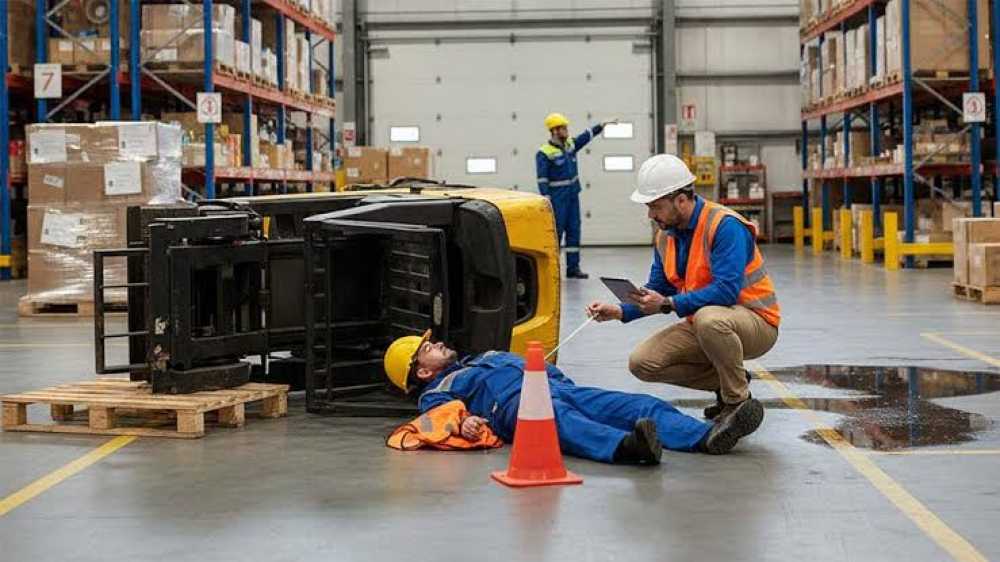
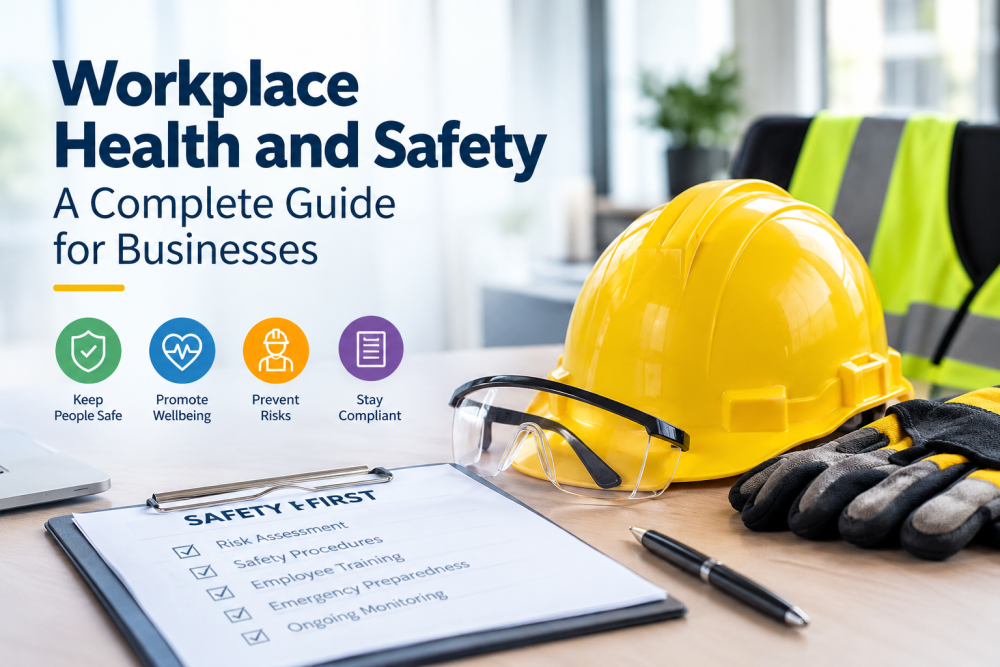
Workplace health and safety is essential for protecting employees, maintaining operational efficiency, and building a responsible business. Whether you operate a construction site, manufacturing facility, industrial plant, or commercial establishment, implementing effective health and safety practices helps prevent accidents and reduce workplace risks.
For businesses across the Middle East, a structured approach to health, safety, and environmental management is an important part of sustainable operations.
A safe workplace protects employees while helping organizations maintain productivity and operational continuity. Workplace accidents can result in injuries, equipment damage, project delays, financial losses, and regulatory complications.
An effective workplace safety program helps businesses:
Reduce workplace accidents and occupational injuries.
Identify hazards before they cause harm.
Improve employee awareness and safety practices.
Support compliance with applicable safety requirements.
Strengthen operational efficiency and accountability.
Build a positive workplace safety culture.
Hazard identification is the first step in preventing workplace accidents. Organizations should regularly assess their working environments to identify potential sources of harm.
Common workplace hazards include unsafe machinery, electrical risks, working at heights, chemical exposure, fire hazards, poor housekeeping, and improper material handling.
Regular workplace inspections and risk assessments help businesses identify these hazards and determine appropriate control measures.
A risk assessment evaluates workplace hazards by considering the likelihood of an incident and the potential severity of its consequences.
A practical risk assessment process includes:
Identifying potential hazards.
Determining who may be affected.
Evaluating the likelihood and severity of risks.
Implementing suitable control measures.
Recording findings and assigning responsibilities.
Reviewing controls whenever working conditions change.
Businesses should prioritize eliminating hazards wherever reasonably practicable. When elimination is not possible, other suitable controls should be considered.
Employees need the knowledge and practical skills to recognize hazards and perform their duties safely.
Professional training can cover occupational health and safety, fire safety, hazard identification, emergency response, incident reporting, working at heights, and permit-to-work procedures.
Training should reflect the actual risks associated with each employee's role and be refreshed when necessary.
Routine inspections help identify unsafe conditions before they result in accidents.
Inspection activities may include checking machinery, emergency exits, fire protection equipment, electrical installations, personal protective equipment, and housekeeping practices.
Businesses should document inspection findings, assign corrective actions, and follow up to verify that identified issues have been resolved.
Every workplace incident provides an opportunity to identify weaknesses in existing safety controls.
Incident investigations should focus on understanding the underlying causes rather than simply assigning blame. Findings can help organizations introduce corrective actions, improve procedures, and prevent similar incidents.
Near misses should also be reported and investigated because they can reveal hazards before a serious accident occurs.
Workplace safety is a shared responsibility involving management, supervisors, employees, and contractors.
Organizations can strengthen their safety culture by encouraging hazard reporting, communicating safety expectations clearly, involving employees in risk assessments, and ensuring that corrective actions are implemented consistently.
Management commitment is particularly important because employees are more likely to follow safety procedures when leaders demonstrate that safety is a genuine priority.
Total Quality Consultancy (QPRO) provides QHSE consultancy, professional training, audits, and workplace safety-related services designed to help organizations strengthen their safety management practices.
With appropriate assessments, training, and expert guidance, businesses can identify improvement opportunities and develop more effective workplace safety systems.
Workplace health and safety should be an integral part of every organization's operations. Through hazard identification, risk assessment, employee training, inspections, and incident investigation, businesses can reduce risks and create safer working environments.
Investing in workplace safety is an investment in employees, operational performance, and long-term business sustainability.
Looking to improve workplace safety in your organization? Contact QPRO to discuss your QHSE consultancy and professional training requirements.
Meta Title: Workplace Health and Safety Guide for Businesses | QPRO
Meta Description: Discover essential workplace health and safety practices, including risk assessments, safety training, inspections, and incident prevention for businesses.
Primary Keyword: Workplace health and safety
Secondary Keywords: QHSE consultancy, workplace safety training, occupational health and safety, workplace risk assessment, HSE audits

QPRO delivers expert HSE consultancy, food safety, and QHSE training services.
Copyright @2026 - Total Quality Consultancy & Training Services (QRPO)
Made With by Weblanza