Workplace health and safety is a fundamental responsibility for every organization. In Oman, businesses across construction, oil and gas, manufacturing, logistics, engineering, and other industrial sectors must take proactive steps to protect employees, prevent workplace accidents, and maintain safe working conditions.
Workplace incident investigation and HSE inspection are essential elements of an effective Health, Safety, and Environment (HSE) management system. They help organizations identify hazards, understand the causes of incidents, correct unsafe conditions, and prevent similar events from occurring in the future.
By implementing systematic inspection procedures and effective incident investigation practices, companies can improve safety performance, protect their workforce, and support compliance with applicable occupational health and safety requirements in the Sultanate of Oman.
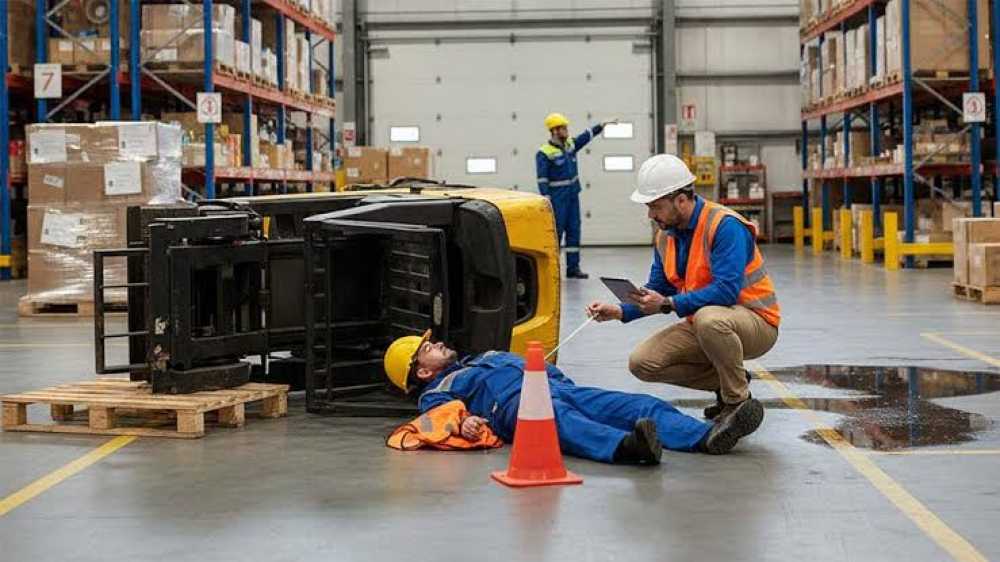
Workplace incident investigation is a structured process used to examine accidents, injuries, near misses, property damage, and other unexpected events that occur during work activities.
The purpose of an investigation is not simply to determine what happened. It is to identify the immediate and underlying causes, evaluate whether existing safety controls were effective, and recommend corrective actions to prevent recurrence.
A professional incident investigation may involve:
A well-conducted investigation helps organizations learn from incidents and continuously improve their safety management systems.
Oman has a wide range of industrial and commercial activities where effective HSE management is essential. Construction projects, oil and gas operations, industrial facilities, and maintenance activities may involve hazards such as working at height, lifting operations, electrical work, confined spaces, hazardous substances, and heavy machinery.
Incident investigation helps organizations understand how these hazards can lead to accidents and what measures are needed to control them.
The key benefits include:
1. Prevention of recurring accidents
Investigating incidents and near misses helps identify weaknesses in safety procedures and implement measures to prevent similar events.
2. Improved workplace safety
Investigation findings can highlight unsafe practices, inadequate training, equipment defects, and gaps in supervision or risk control.
3. Better risk management
Lessons learned from incidents can be incorporated into risk assessments, method statements, toolbox talks, and operational procedures.
4. Support for regulatory compliance
Proper incident records and reporting procedures help organizations meet applicable legal, regulatory, and contractual obligations.
5. Reduced operational disruption
Addressing underlying safety issues can help reduce injuries, equipment damage, work interruptions, and associated costs.
An HSE workplace inspection is a planned examination of work areas, equipment, activities, and safety arrangements to identify hazards and verify that appropriate controls are in place.
Inspections may be conducted daily, weekly, monthly, or at other intervals depending on the nature of the work, the level of risk, applicable requirements, and the organization's HSE procedures.
Typical workplace inspection activities include:
Regular inspections help organizations identify problems before they result in injuries, property damage, or environmental incidents.
Routine inspections focus on everyday workplace conditions, including housekeeping, PPE use, access routes, equipment condition, and compliance with established safety procedures.
Construction site inspections assess hazards associated with excavation, scaffolding, working at height, lifting operations, temporary electrical systems, mobile equipment, and material handling.
Industrial inspections focus on machinery safeguards, electrical installations, equipment condition, hazardous substances, maintenance practices, and other risks relevant to the facility.
HSE audits involve a more systematic review of safety management systems, documentation, responsibilities, operational controls, and compliance with applicable requirements and company standards.
Follow-up inspections verify that previously identified deficiencies have been addressed effectively and that the corrective measures are working as intended.
An effective incident investigation should follow a consistent and documented procedure.
The first priority is to protect people, arrange medical assistance where necessary, and secure the affected area. Further work should not continue where an uncontrolled hazard presents a risk.
The incident should be reported through the organization's established HSE procedure. Relevant management personnel, clients, and authorities should be notified where required by applicable rules or contractual arrangements.
Investigators gather relevant information, including photographs, witness statements, equipment details, work permits, training records, and risk assessments, while preserving evidence appropriately.
The investigation team examines why the incident occurred. This may involve evaluating equipment failures, inadequate procedures, training gaps, environmental conditions, supervision, and the effectiveness of existing risk controls.
A formal report records the incident details, sequence of events, findings, causes, recommendations, and assigned corrective actions.
Actions are assigned to responsible persons with appropriate deadlines. Measures may include equipment repairs, revised procedures, additional training, improved supervision, or stronger engineering controls.
The organization verifies that corrective actions have been completed and checks their effectiveness. Relevant lessons should be communicated to employees and incorporated into future risk assessments and safety briefings.
Organizations operating in Oman should ensure that their HSE arrangements reflect the applicable Omani legal framework, relevant ministerial decisions, sector-specific requirements, and client standards.
Oman's Labour Law addresses occupational safety and health responsibilities. Article 104 requires employers to inform workers about occupational hazards and preventive measures, provide necessary safety arrangements, maintain suitable workplace conditions, and provide relevant training. Article 107 addresses corrective measures where occupational safety and health violations are identified and action where an imminent danger threatens workers.
Organizations should establish suitable procedures for:
The Omani government also provides a service for registering workplace injuries and occupational diseases in accordance with the applicable occupational safety and health regulations.
Important: Reporting timelines, notification requirements, and procedures may vary according to the incident type, severity, applicable regulations, and industry requirements. Companies should verify the current requirements with the relevant Omani authorities and competent HSE professionals.
Professional workplace inspection and incident investigation support can benefit organizations in several sectors across Oman, including:
Each industry has its own operational risks and safety requirements. Inspection programs and investigation procedures should therefore be tailored to the specific activities, equipment, workforce, and regulatory obligations involved.
HSE consultants provide technical guidance and practical support to organizations seeking to improve their workplace safety performance.
Depending on the agreed scope of services, an HSE consultancy can assist with workplace inspections, incident investigation, root cause analysis, risk assessments, HSE documentation, compliance gap assessments, safety training, and corrective action monitoring.
Professional support can help organizations establish consistent inspection schedules, improve the quality of investigation reports, strengthen hazard control measures, and encourage a proactive safety culture.
The objective is to move beyond simply responding to accidents and toward identifying and controlling risks before incidents occur.
Workplace incident investigation and HSE inspection are essential practices for preventing accidents, protecting employees, and improving operational performance.
By identifying hazards, investigating incidents systematically, implementing corrective actions, and conducting regular workplace inspections, organizations can strengthen their safety management systems and work toward compliance with applicable requirements in Oman.
A proactive HSE approach protects people, supports business continuity, and promotes a culture in which safety is a shared responsibility.
At [Your Company Name], we recognize the importance of workplace safety, effective incident investigation, and systematic HSE inspections.
We aim to support organizations in Oman with practical HSE solutions tailored to their operational requirements, helping them identify hazards, investigate incidents, assess workplace conditions, and implement appropriate corrective measures.
Whether your organization requires workplace safety inspections, incident investigation support, root cause analysis, risk assessments, HSE documentation, or safety improvement recommendations, our services can be tailored to your project and industry needs.
Identify hazards. Investigate incidents. Prevent recurrence. Build a safer workplace.

QPRO delivers expert HSE consultancy, food safety, and QHSE training services.
Copyright @2026 - Total Quality Consultancy & Training Services (QRPO)
Made With by Weblanza